
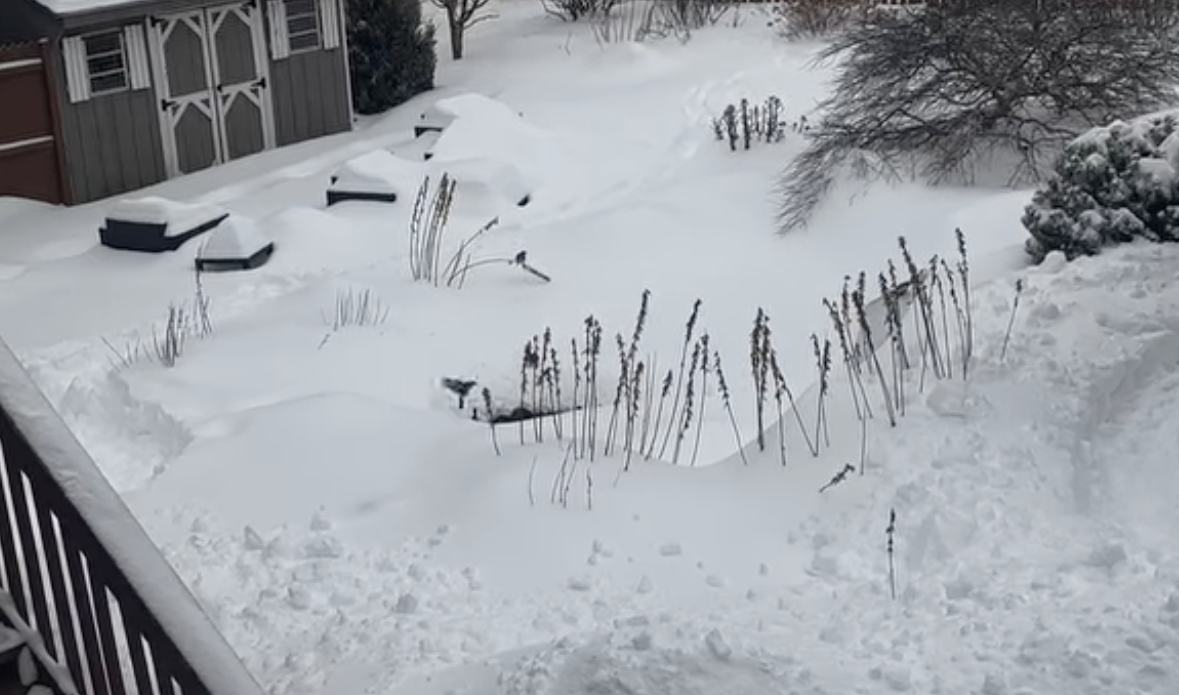
The snow is melting. The ground is thawing. And right now, across yards throughout Northern New Jersey, drainage problems that stayed hidden all year are finally showing themselves. If you're noticing puddles that won't drain, soggy areas in the lawn, or water pooling where it shouldn't—you're seeing exactly what we see every year when winter's snowpack meets warming temperatures.
This is actually the best time to identify drainage issues. The combination of saturated soil, melting snow, and spring rain events reveals weak points in any drainage system—especially those that were never designed for extreme conditions.
Why the Melt Creates So Many Problems
When snow melts while the ground is still partially frozen or fully saturated, water has nowhere to go. It can't soak in naturally. Instead, it pools on the surface, flows toward low spots, and overwhelms systems that might handle normal rainfall just fine.
- Basement and crawl space moisture or flooding
- Driveway and apron washouts
- Lawn erosion and muddy slopes
- Mud, debris, and standing water on patios and walkways
- Water pressure building behind retaining walls
If any of this looks familiar, you're not alone. A single heavy melt event can reveal years of hidden drainage deficiencies.
Pipe Size & System Capacity Are Critical
One of the most common issues we see is undersized drainage pipe. A system that performs fine during normal weather may completely fail during snow melt and prolonged rain.
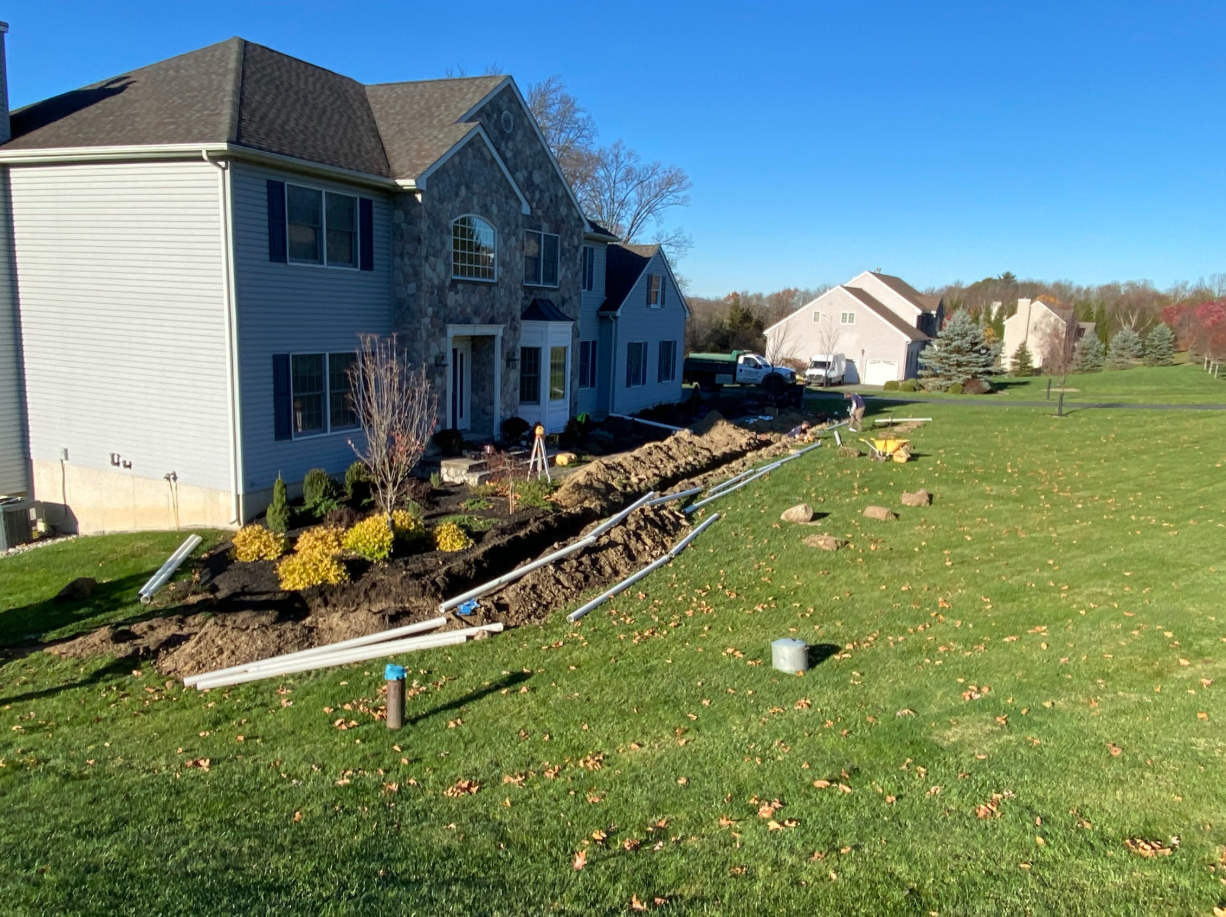
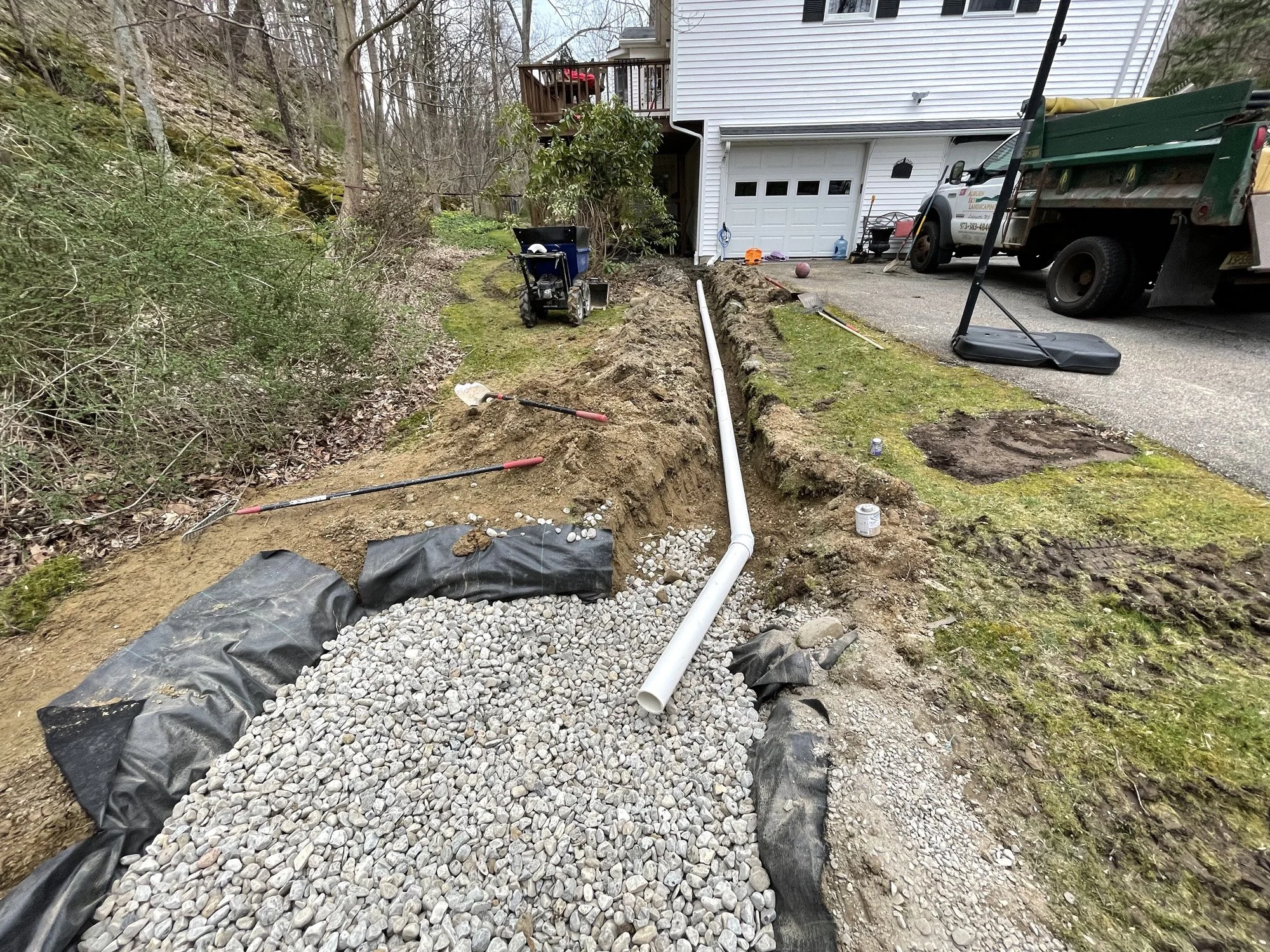
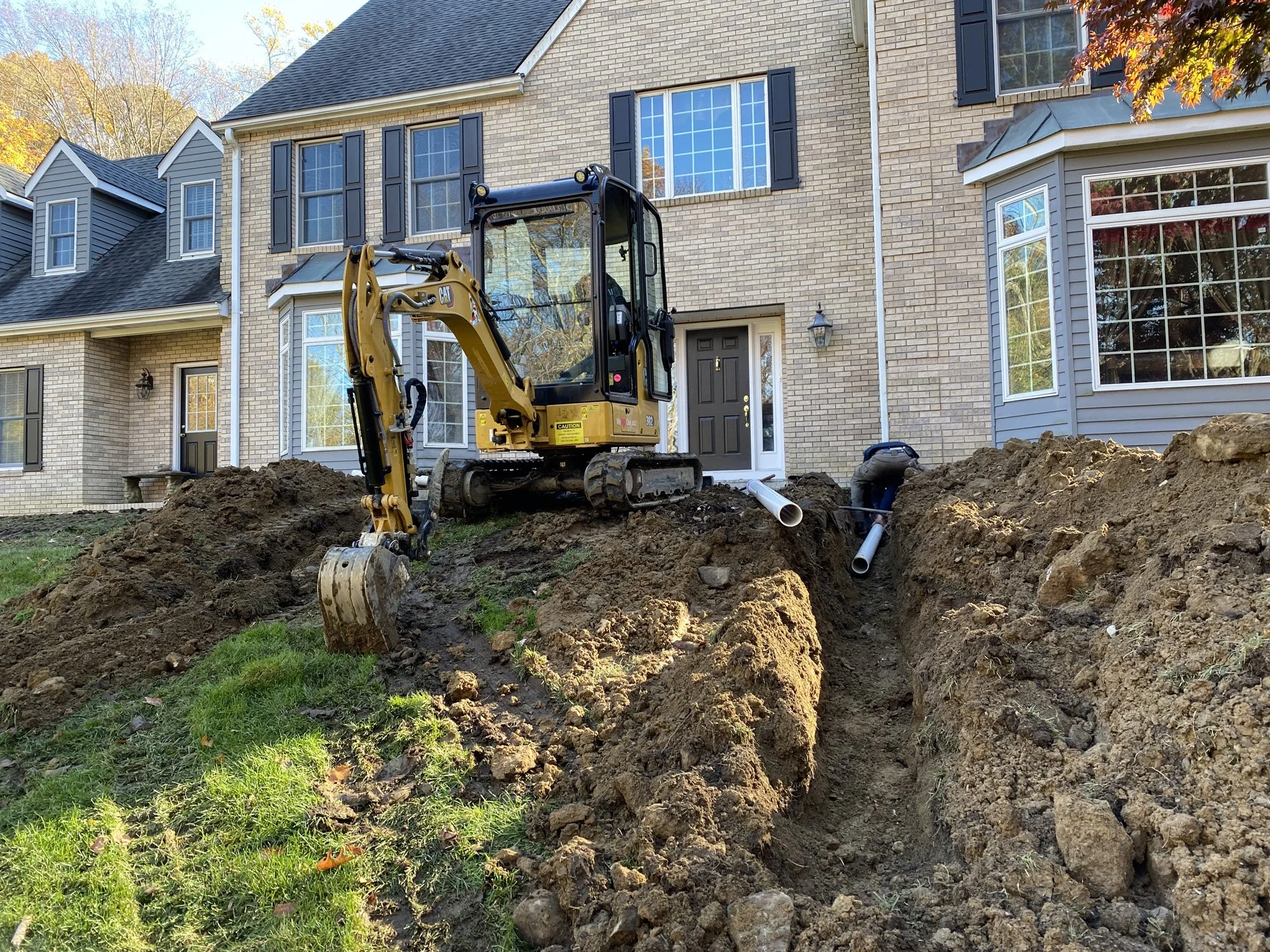
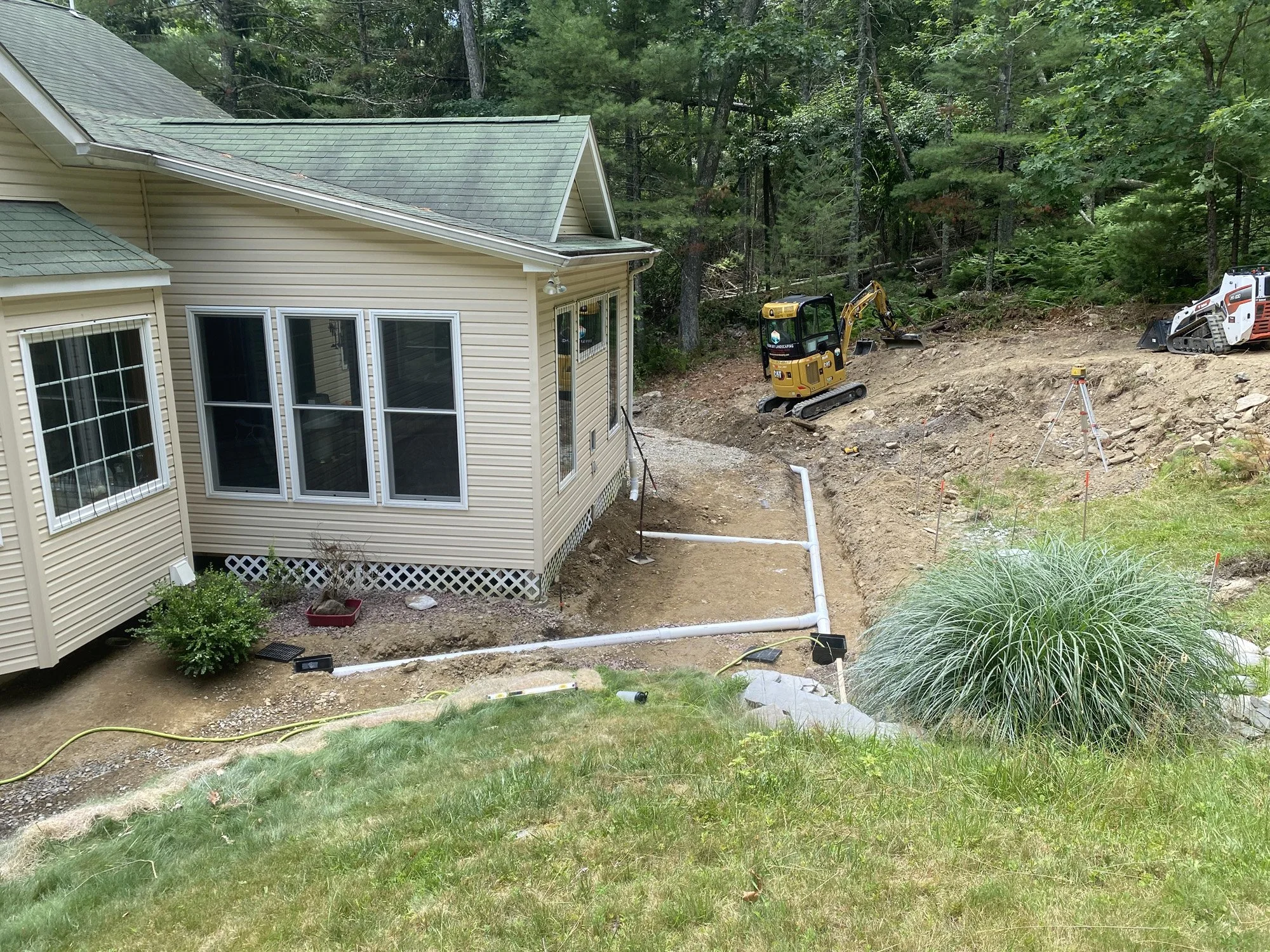
Proper stormwater management often requires a layered approach:
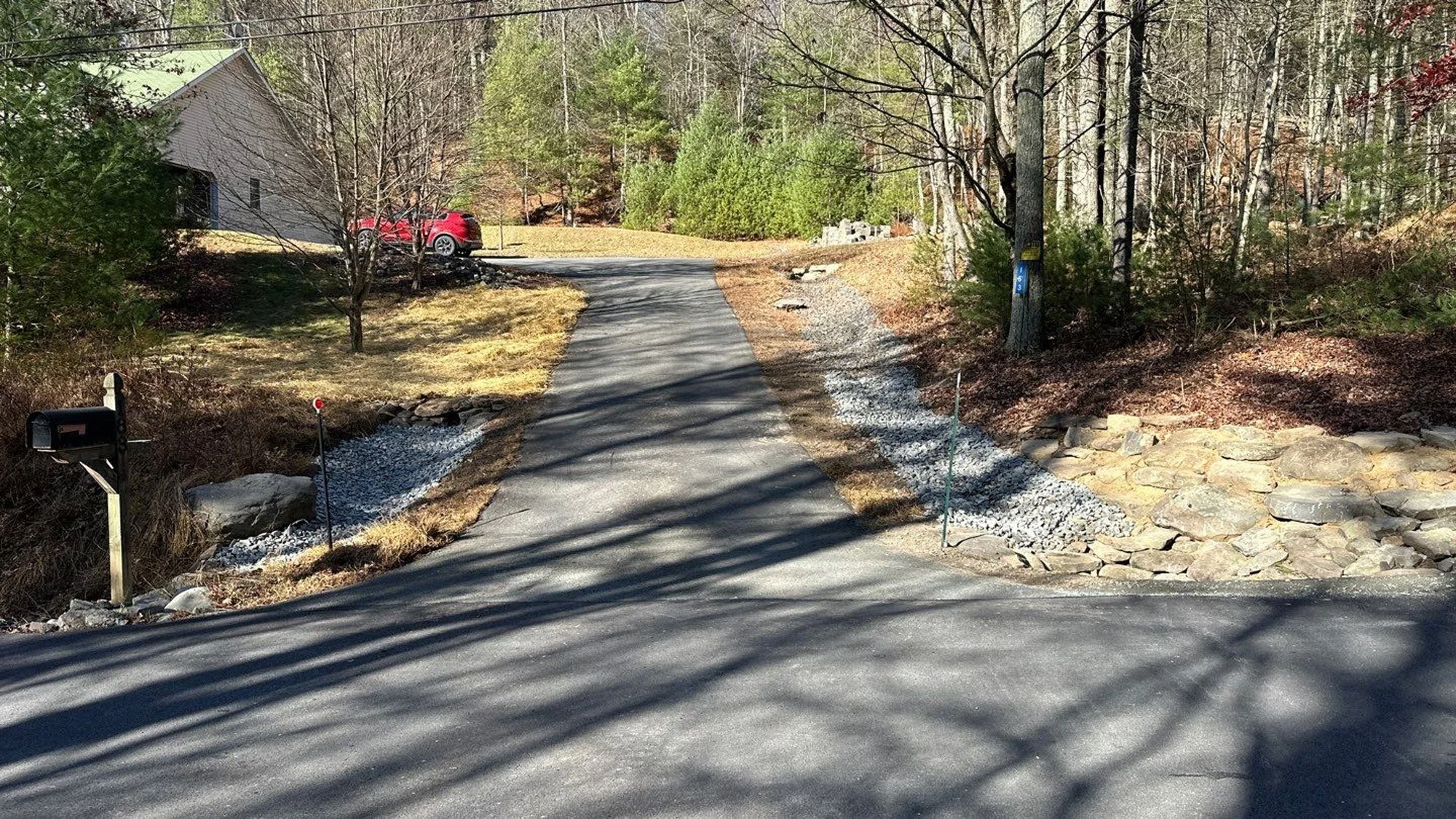
Swales
Move large volumes of surface water safely down to lower areas
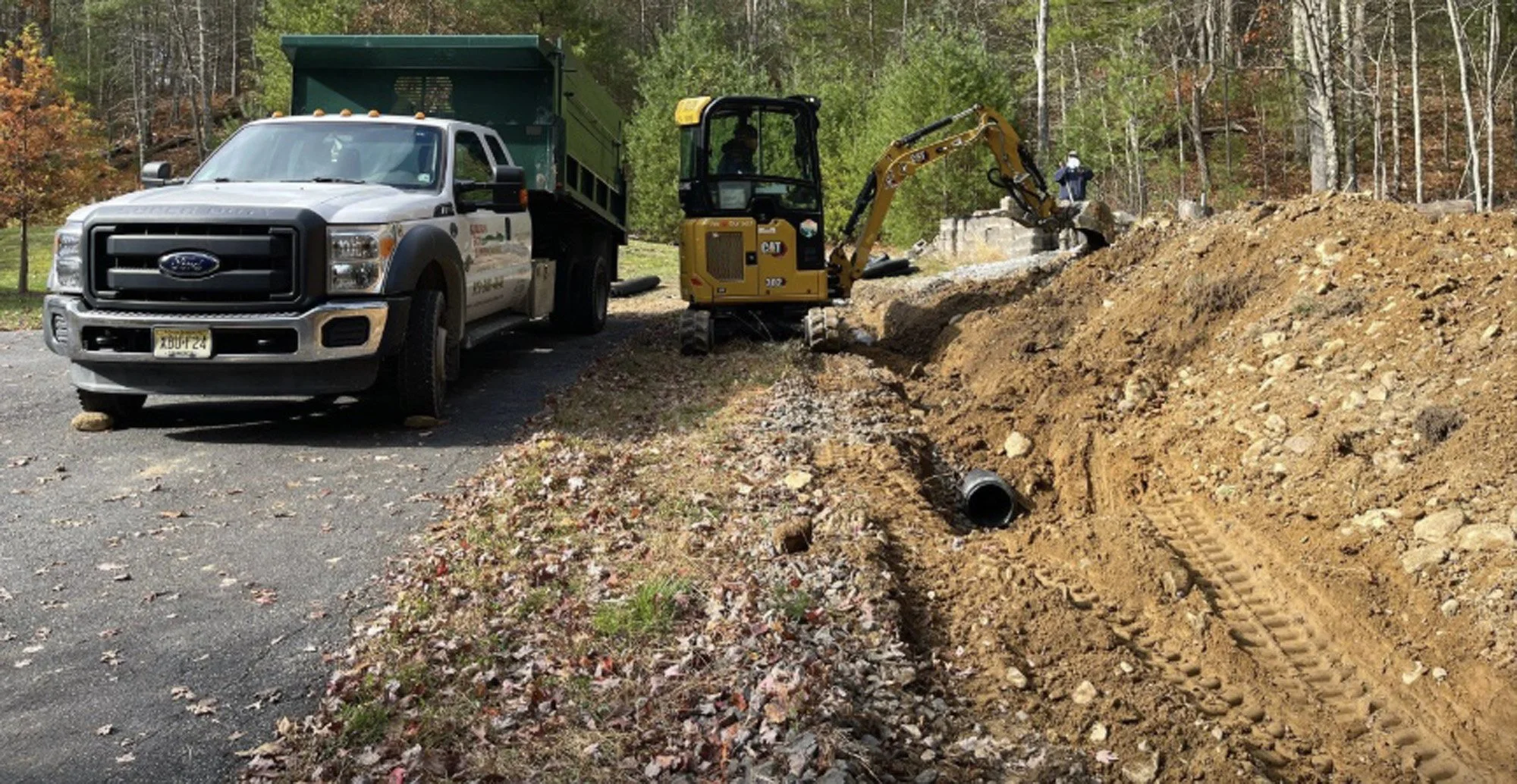
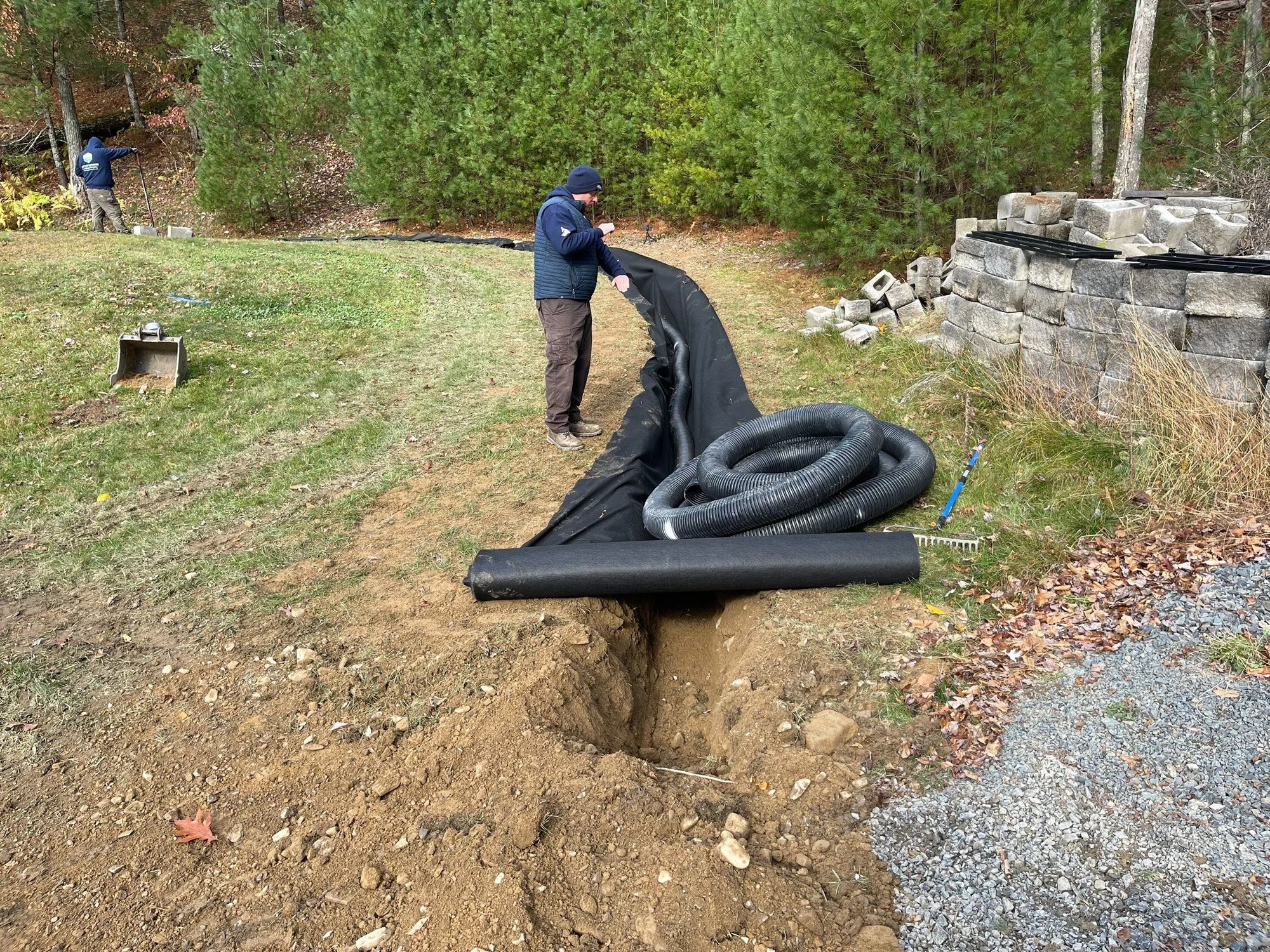
French Drains
Manage subsurface water flow
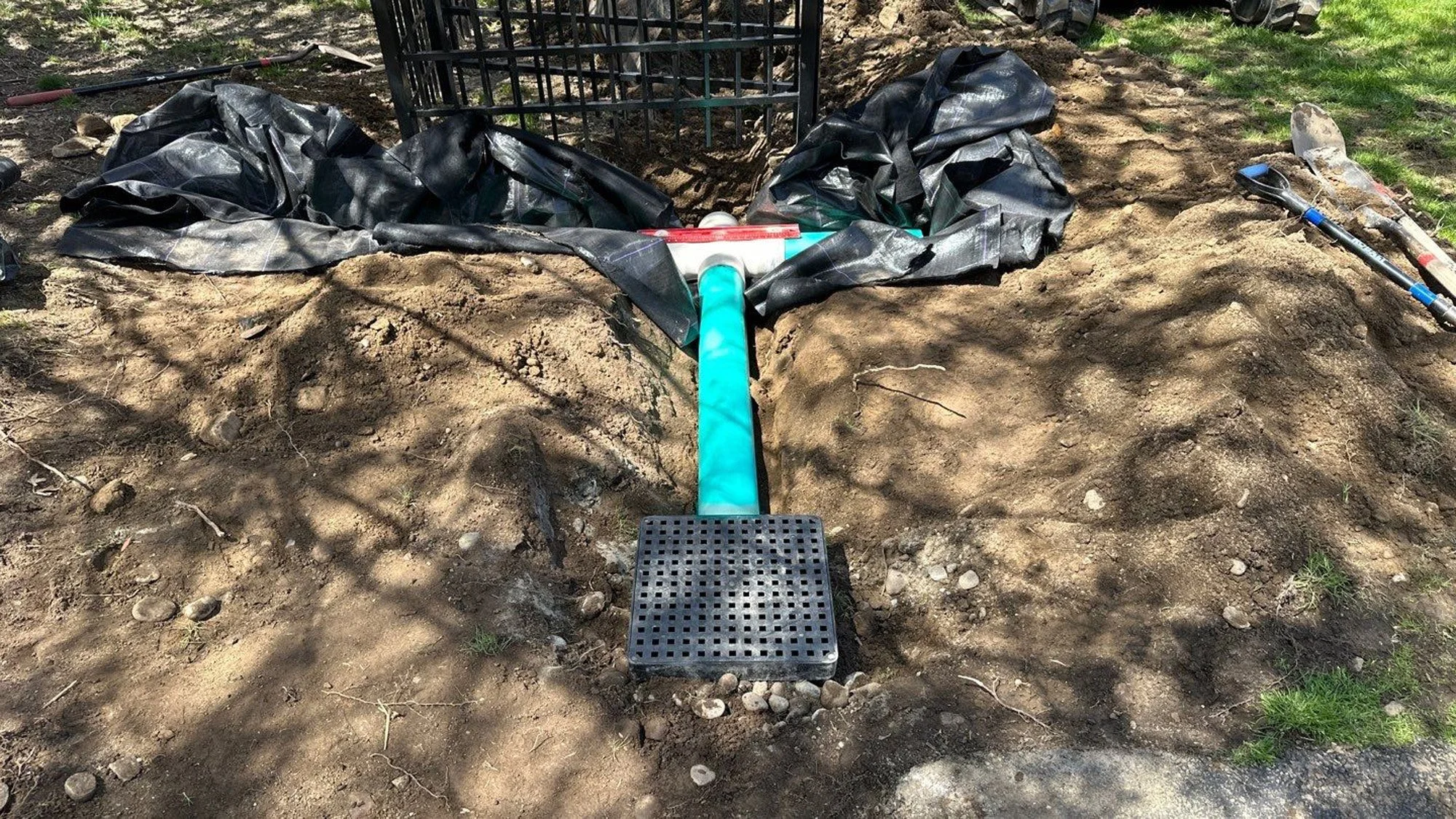
Catch Basins
Collect runoff before damage occurs
Culvert Pipes
Handle high-flow driveway crossings
Gutter Drains
Keep roof water away from foundations
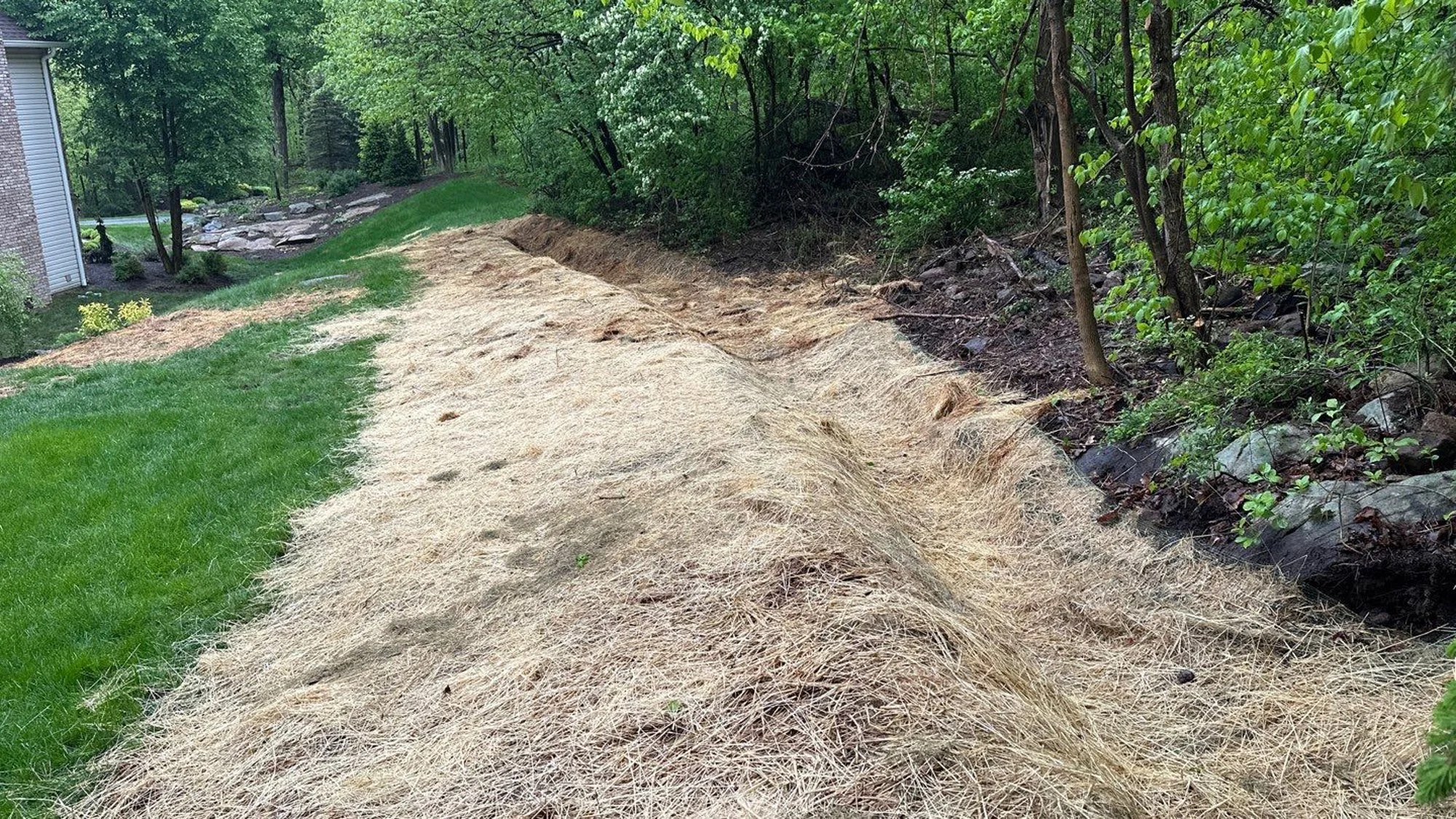
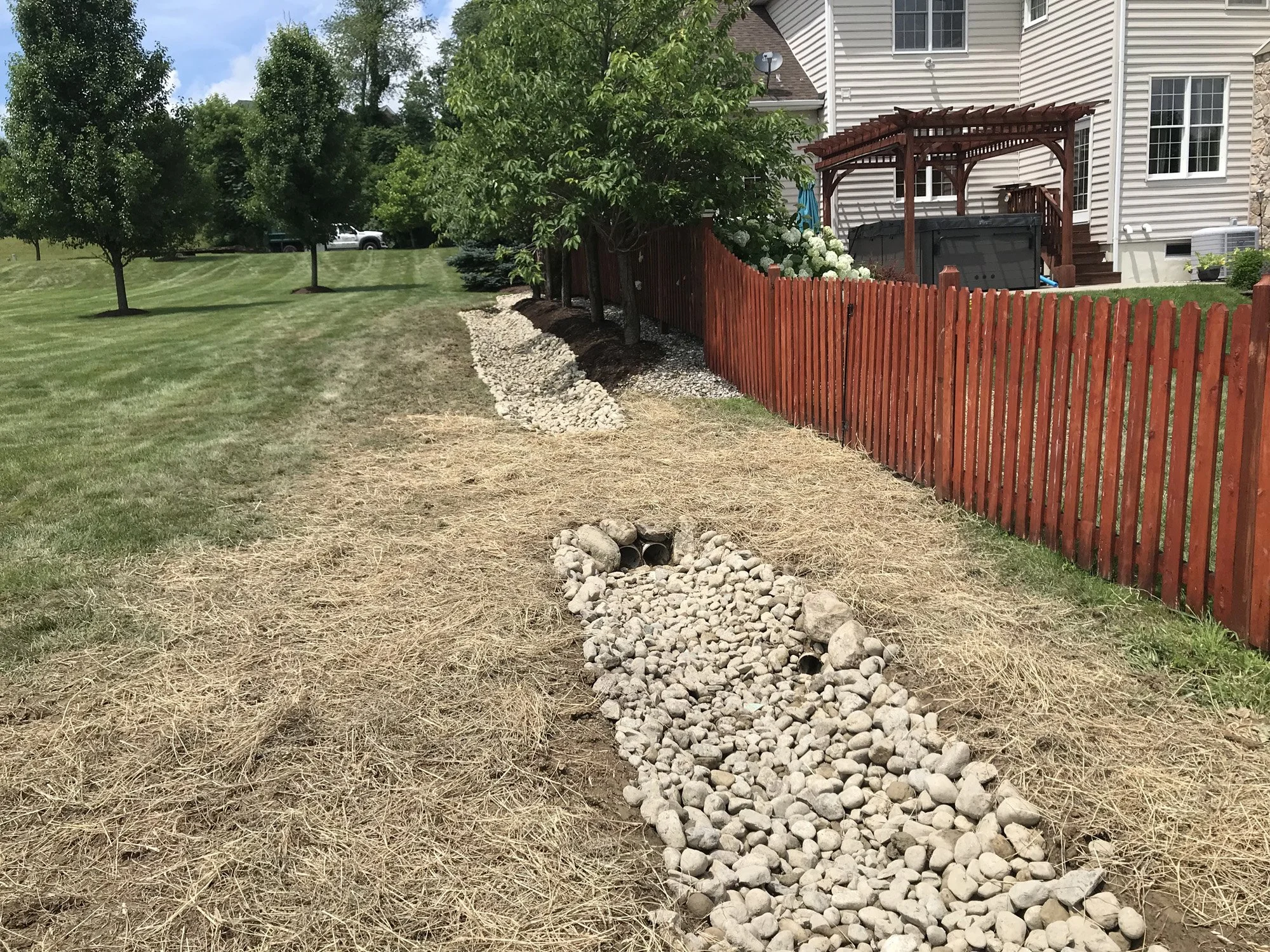
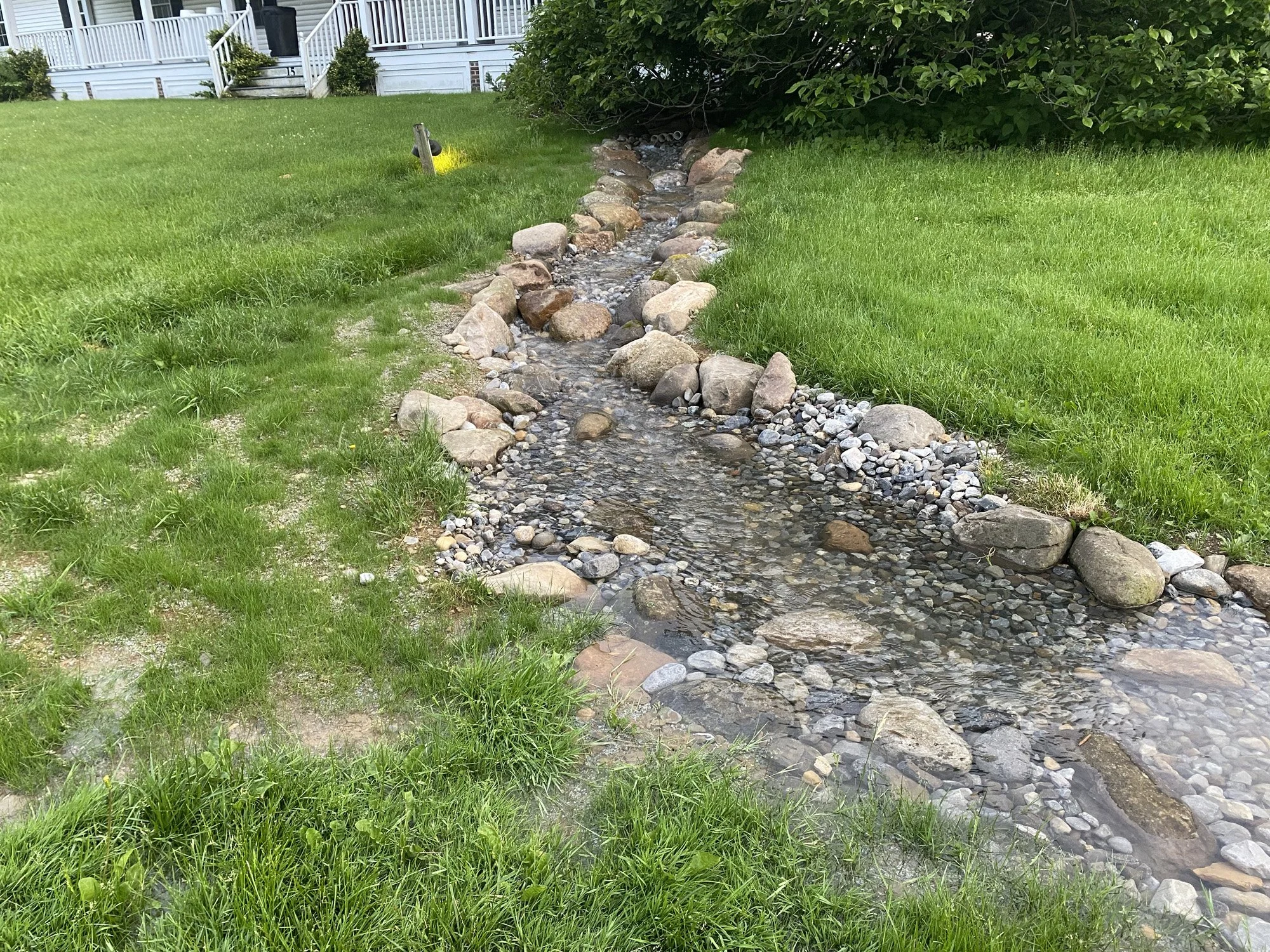
Swales, in particular, are extremely effective during snow melt because they can carry a tremendous amount of water down to lower areas of your property without relying solely on buried pipes.
Right Now Is the Best Time to Document Problems
While the ground is still wet and water is actively moving across your property, this is your window to see exactly where drainage is failing. Problems that disappear in dry weather are on full display right now.
- Walk your property and note where water is pooling or flowing
- Check the ends of existing drain pipes—are they blocked by debris, mud, or still frozen?
- Take photos and videos of problem areas while water is still visible
- Mark spots that stay wet the longest with a stake or flag
- Check your basement and crawl space for moisture or new water intrusion
This documentation is invaluable. When you're ready to fix the problem, a contractor can see exactly what's happening under real conditions—not just guess based on dry-weather observations.
We've put together a printable guide you can take with you while walking your property. It covers gutters, pooling water, slopes, drains, driveways, foundation issues, and signs of underground pipe problems—plus space to note what you find.
Plan the Fix for When the Ground Dries Out
The wet conditions that reveal problems aren't the same conditions you want for repairs. The smart move is to document now, then schedule the work for when the ground firms up—typically late spring through early fall.
Getting on a contractor's schedule early means you won't be waiting when conditions are right. And addressing the issue before next winter is the only way to prevent the same problems from repeating.
Camera Inspections: A Game Changer for Existing Systems
If you suspect blocked, cracked, or failing underground pipes, consider hiring a company with a drainage camera inspection system.
- A camera that can travel through the pipe
- A locator that pinpoints the exact location of issues underground
We've seen pipes fail due to soil settlement causing sagging or "bellies," cracked or collapsed sections, and tree roots traveling long distances in search of water.
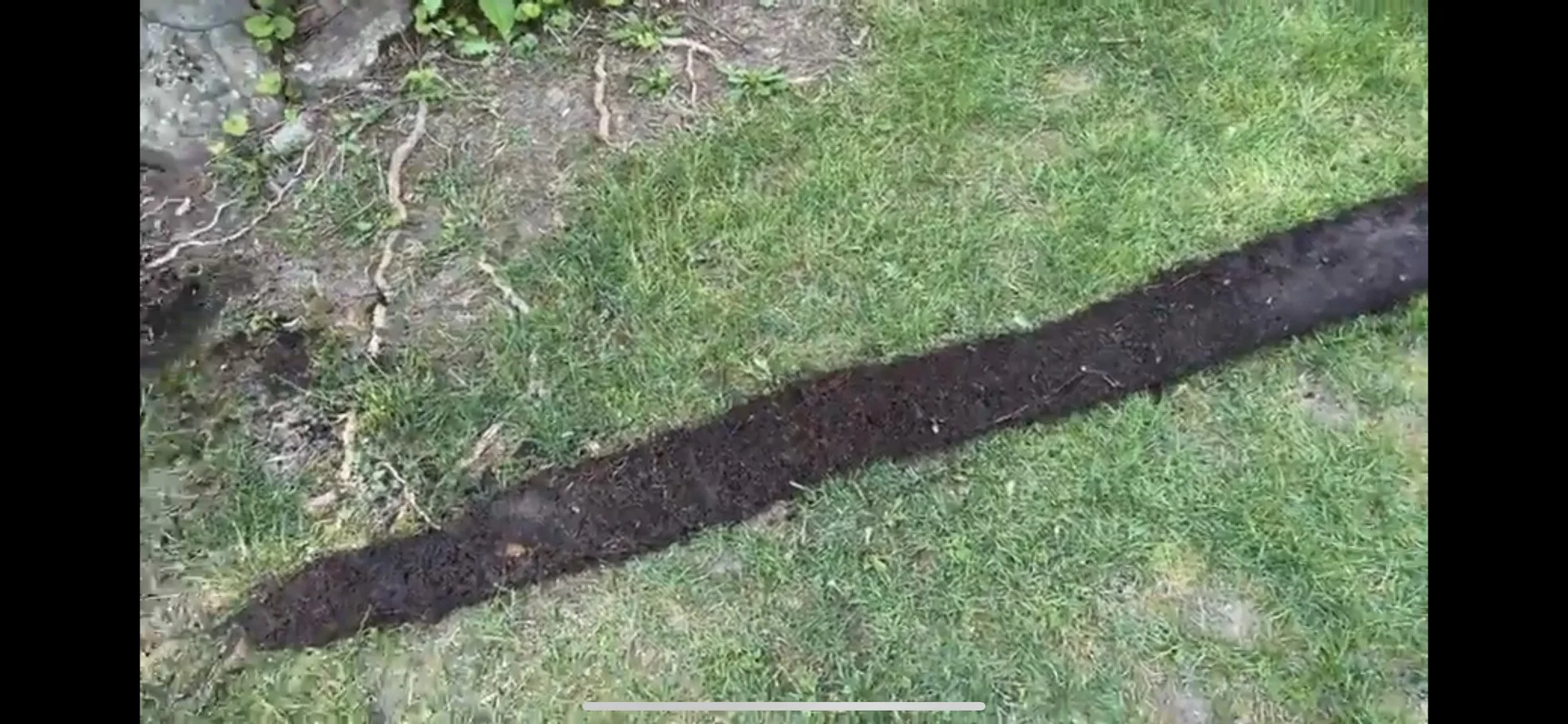
In fact, we've removed 20-foot-long root systems that caused 100% blockages, forcing water back toward homes and hardscapes. With a camera and locator, problem areas can be marked, flagged, and repaired precisely—without unnecessary excavation.
We Get It—Drainage Isn't the Project You Want to Pay For
Nobody dreams about installing French drains. When you think about investing in your property, you picture a new patio, a water feature, beautiful plantings—not pipes buried underground that you'll never see again.
But here's the reality: drainage problems don't stay in the yard. What starts as a soggy spot in the lawn eventually becomes water in the basement, cracks in the foundation, or a retaining wall that's slowly failing. The longer it's ignored, the more expensive it gets—and the less you can enjoy the outdoor space you have.
Fixing drainage isn't glamorous, but it's what makes everything else work. That patio you want? It won't last if water is undermining the base. That beautiful landscape? It'll struggle in soil that's constantly waterlogged. Getting drainage right is what protects everything else you invest in.
The Bottom Line
The melt is here, and what you're seeing right now is the truth about your drainage. Puddles, soggy spots, and flooded basements aren't random—they're showing you exactly where water management is failing.
At Auburn Sky Landscaping, we design and correct drainage systems with real conditions in mind: snow melt, heavy rainfall, slopes, soil behavior, and long-term performance.
Document what you're seeing now. Then let's fix it right—before next winter brings the same problems back.
Seeing Drainage Problems Right Now?
Send us photos of what you're seeing and we'll schedule a phone consultation to discuss your options—before the evidence dries up.
Schedule Your Phone Consultation